
 Submit a find


 한국어
한국어 日本語
日本語 Español
 Français
 Deutsch
 简体中文
简体中文 繁體中文
繁體中文 Português
 Bahasa Indonesia
 ไทย
ไทย Italiano
 Tiếng Việt
 Türkçe
 Polski
 Русский
 Back to the lab
 JEVLAB NEWS Research & data
Anthropic releases Opus 5.5 usage guide
AI-assisted summaries and translations. Check original sources for context and performance claims.
Anthropic has published a guide for maximizing the effectiveness of the Opus 5.5 model. The focus shifts from step-by-step prompting to defining clear completion criteria and stop conditions for autonomous, long-running tasks.
Translated summary · AI-assisted; check the original.
 Translated summary · AI-assisted; check the original.
The complete thread, at a glance
Independent AI-assisted summaries of CHOI’s connected posts. Images and videos belong to their original creators. Source claims have not been independently verified.
- Opus 5.5 Operational Shift
- Core Best Practices
- Defining Completion Criteria
- Managing Reasoning Effort
- Refining Design Requests
- Establishing Stop Rules
- Utilizing Sub-Agents
- Tracking Long-Running Tasks
- Automated Review and Verification
- Claude App Capabilities
- Safety and Model Transitions
- Fast Mode for Interaction
- Evolution of User Role
- Source Documentation
Opus 5.5 Operational Shift
Anthropic recommends assigning tasks with defined completion criteria and stop points. Users should avoid manual "think carefully" prompts, as the model now manages its own reasoning process, and utilize sub-agents for large-scale work.
Core Best Practices
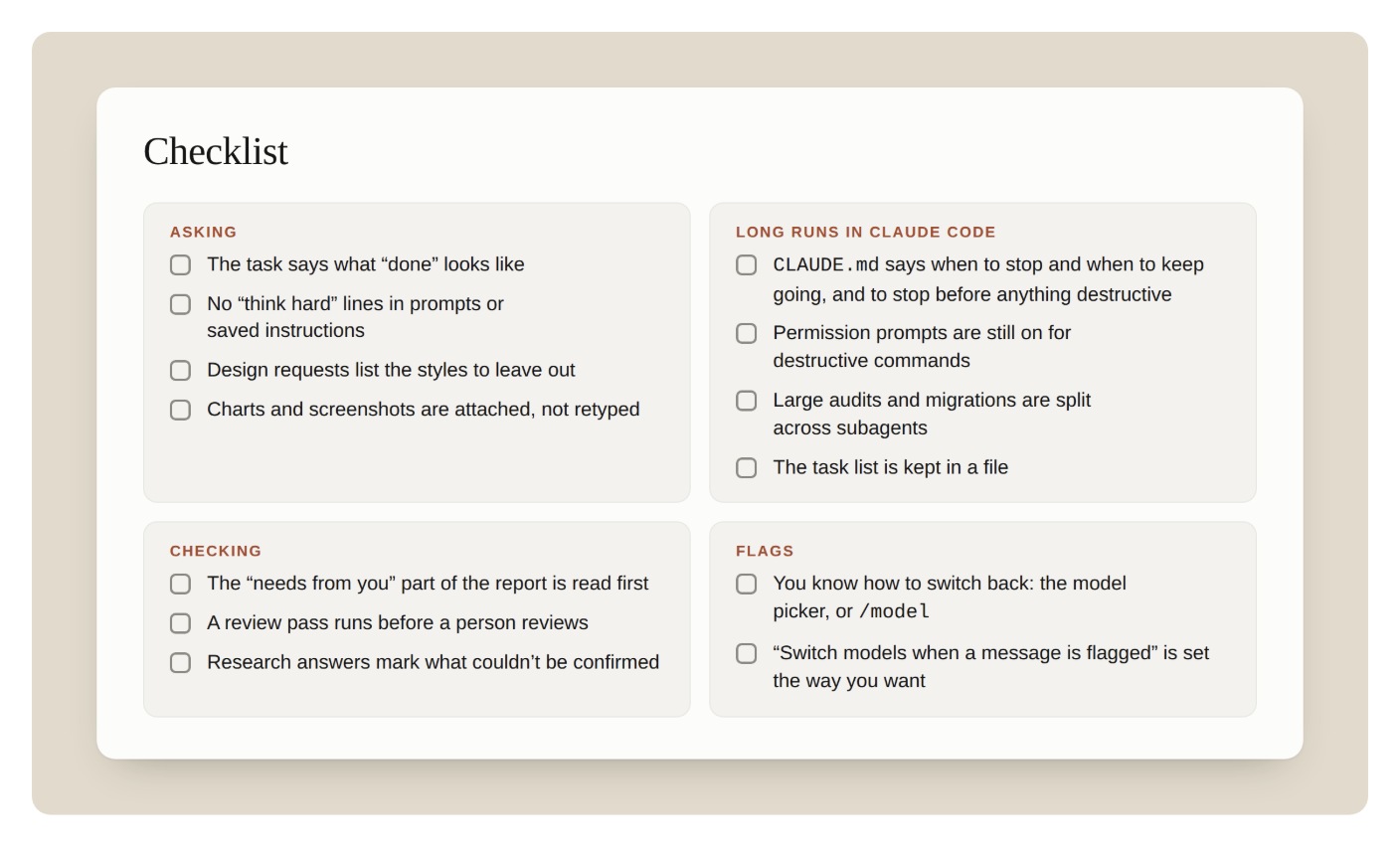
Key recommendations include providing full task context in one message, removing "think carefully" phrases, and using CLAUDE.md to define interaction rules. For complex tasks, users should employ sub-agents and verify reports before final review.
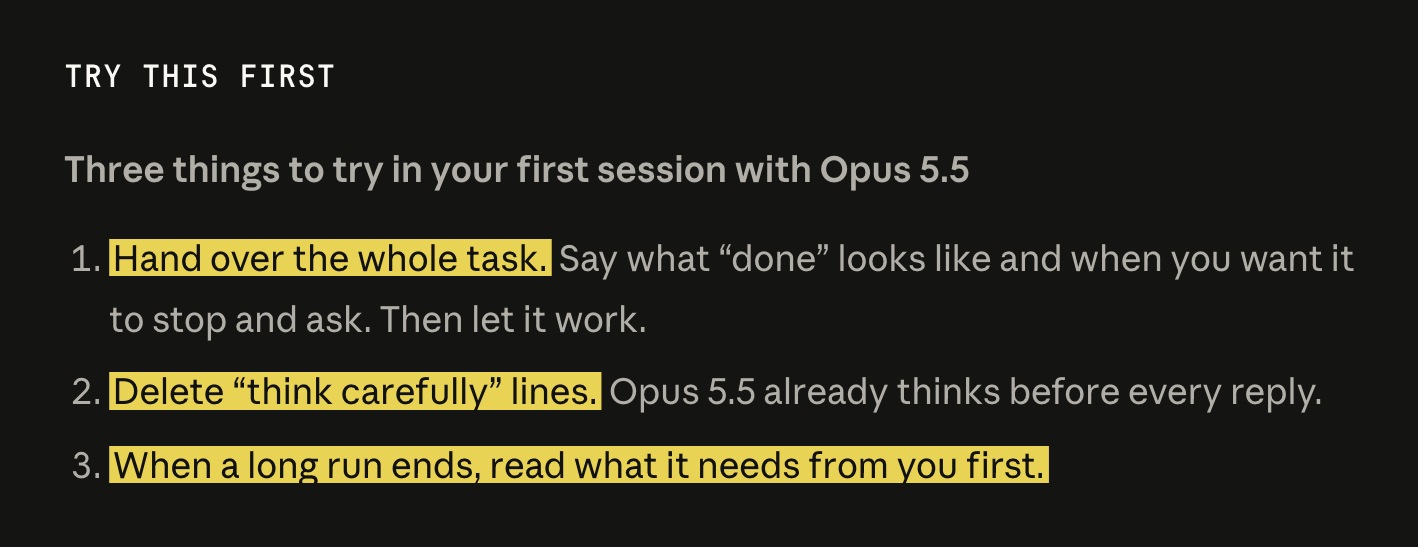
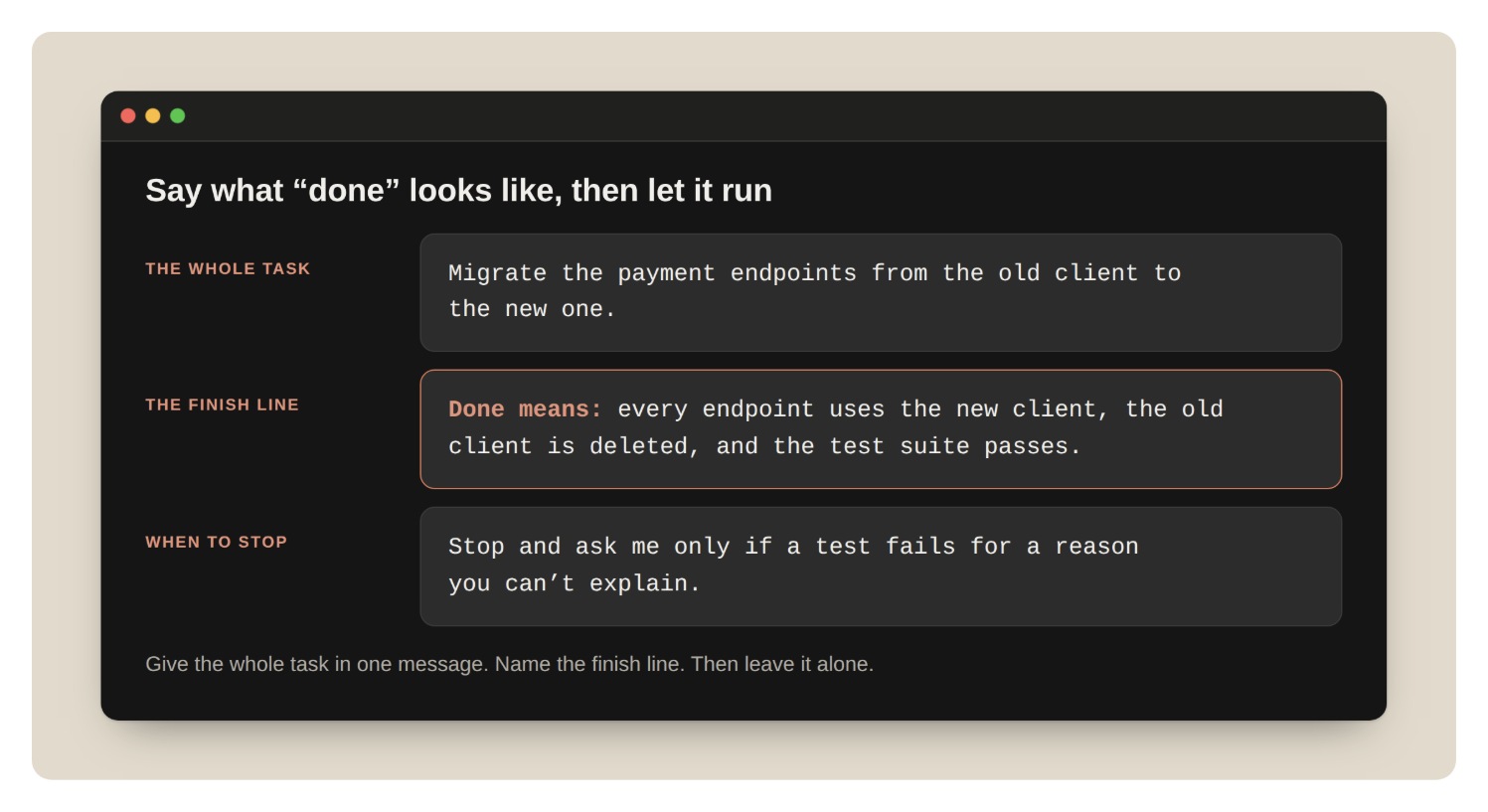
Defining Completion Criteria
The guide suggests providing clear, verifiable success states, such as passing tests or migrating endpoints. Opus 5.5 excels at maintaining long-running tasks without constant supervision when the end goal is explicitly defined.
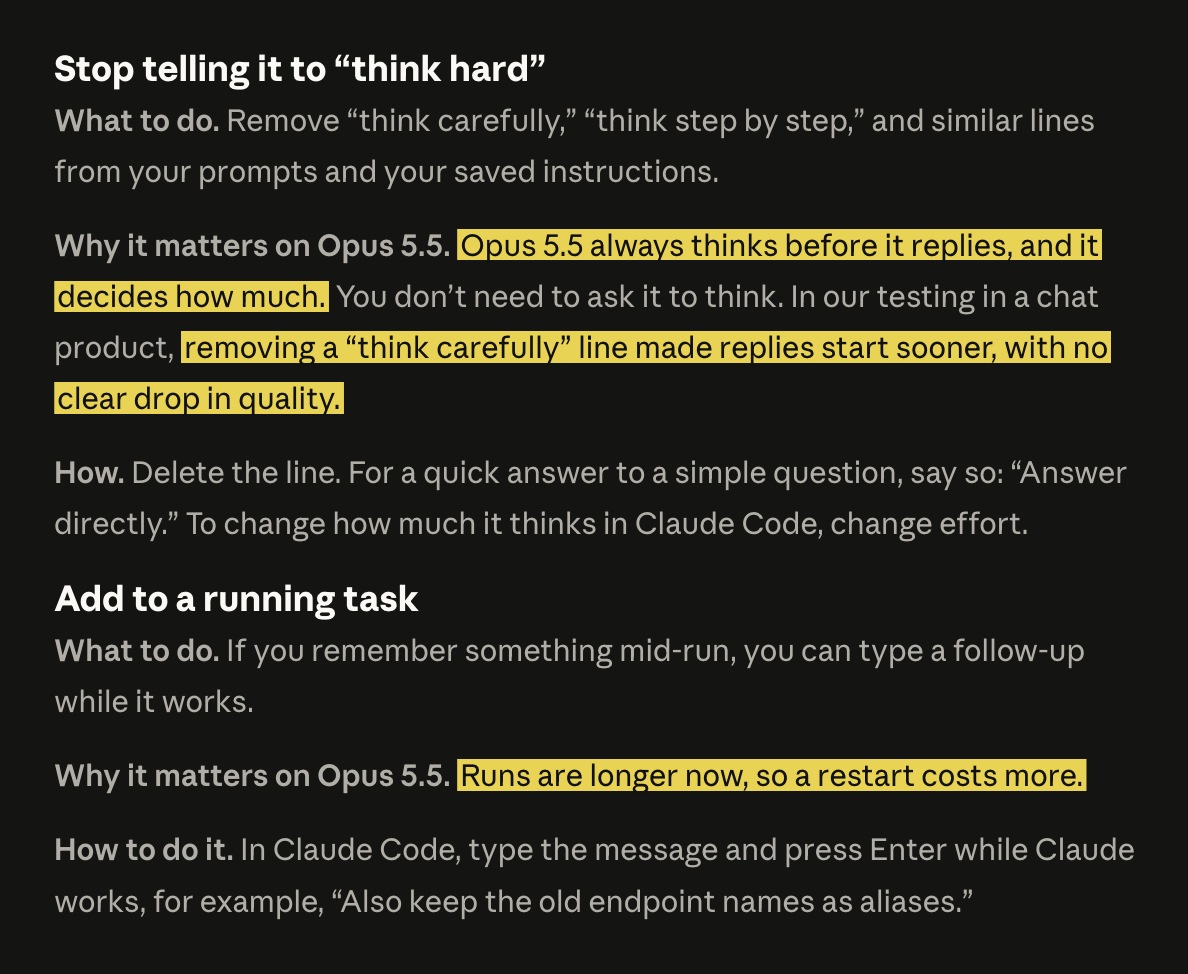
Managing Reasoning Effort
Users should remove "think step by step" prompts, as Opus 5.5 automatically adjusts its reasoning depth. For Claude Code, users can adjust effort settings, and they can provide additional instructions during execution without restarting the task.
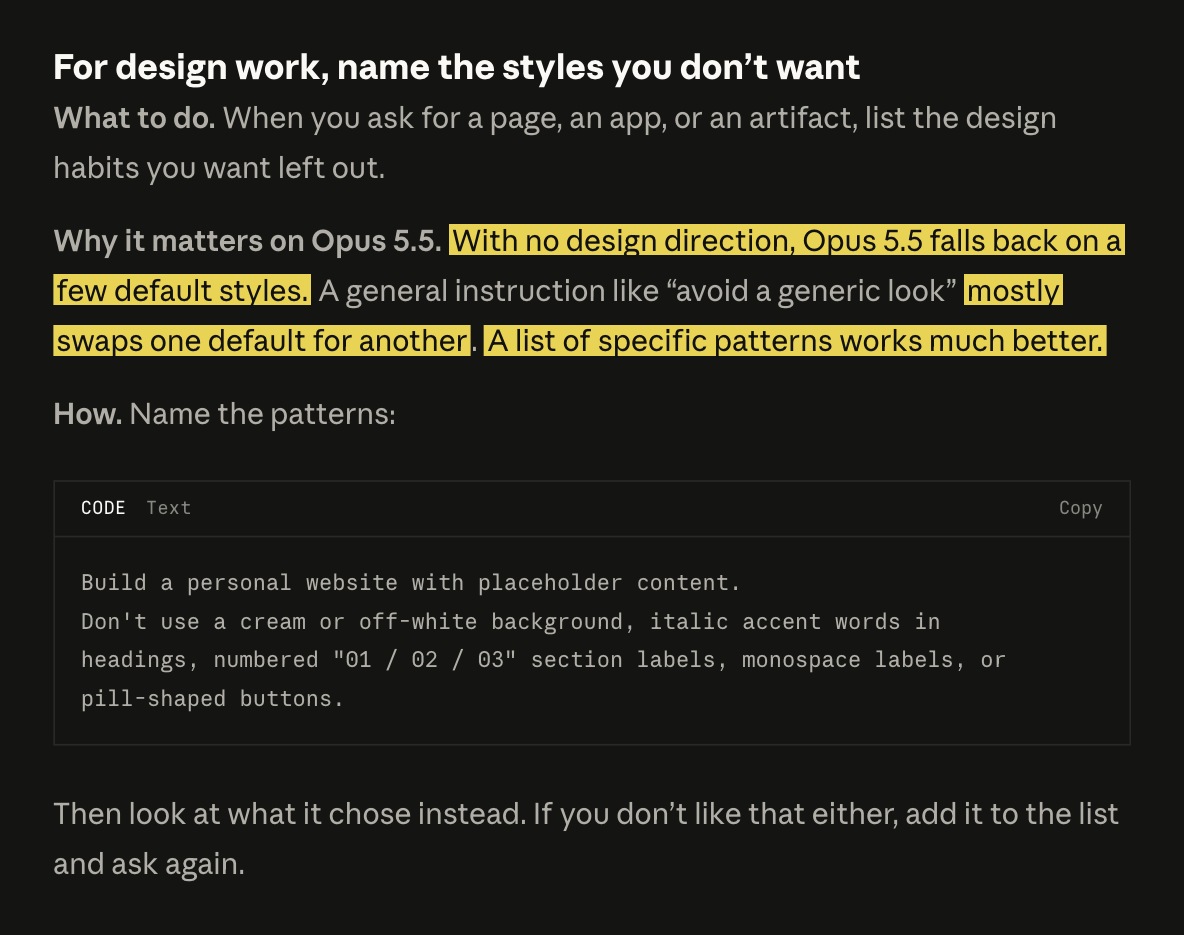
Refining Design Requests
To avoid generic design outputs, Anthropic advises listing specific patterns or styles to exclude. By iteratively adding forbidden elements to a list, users can narrow the model's output toward their desired aesthetic.
Establishing Stop Rules
Users should define clear stop rules in CLAUDE.md to manage autonomous behavior. The model should be instructed to proceed without input for routine tasks but pause for high-risk actions like data deletion or repository changes.
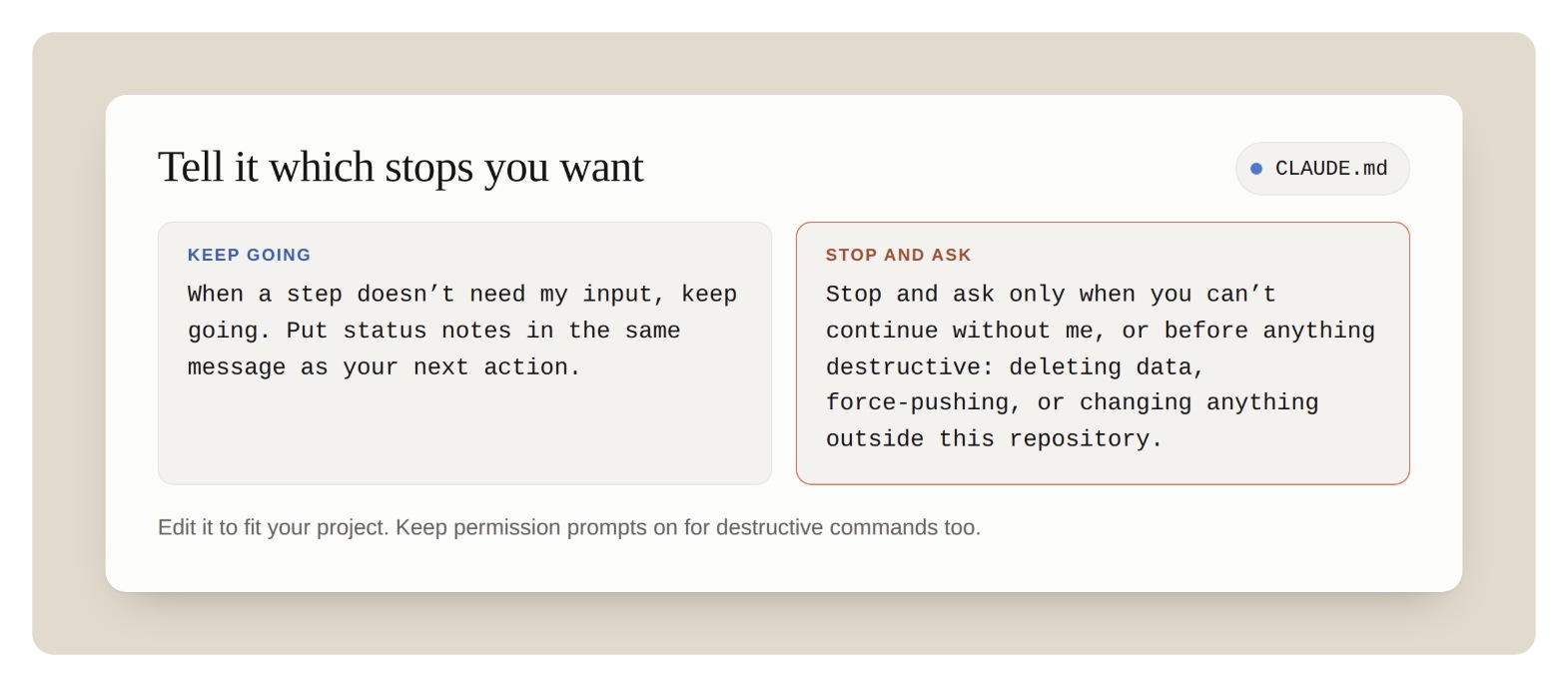
Utilizing Sub-Agents
For large-scale audits or migrations, the guide recommends delegating tasks to sub-agents. The main session should act as a coordinator, verifying the evidence provided by each sub-agent before finalizing the results.
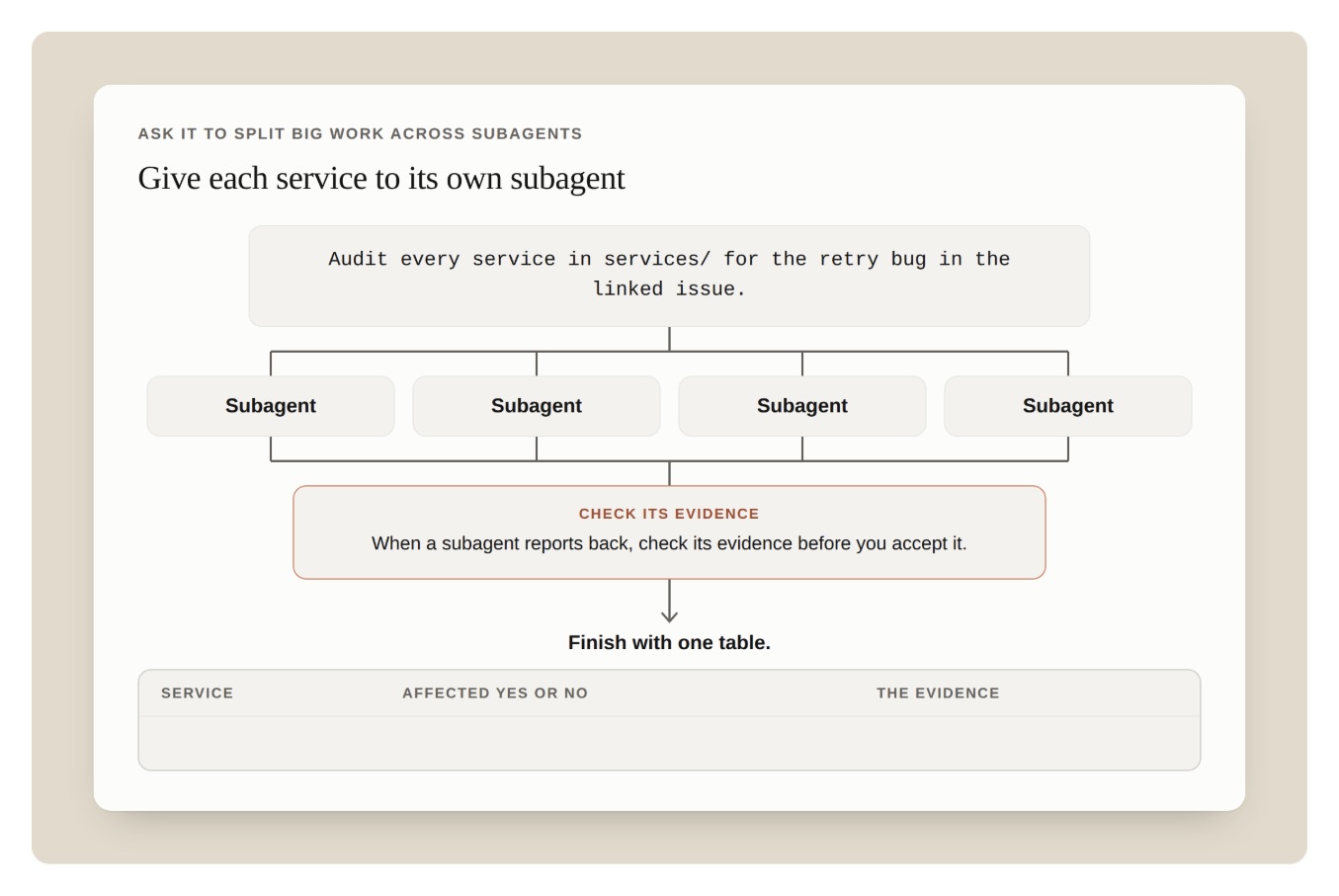
Tracking Long-Running Tasks
Maintaining a TASKS.md file allows users to track progress through context summaries. Upon completion, the model should be instructed to provide a structured report covering pending decisions, changes, and findings.
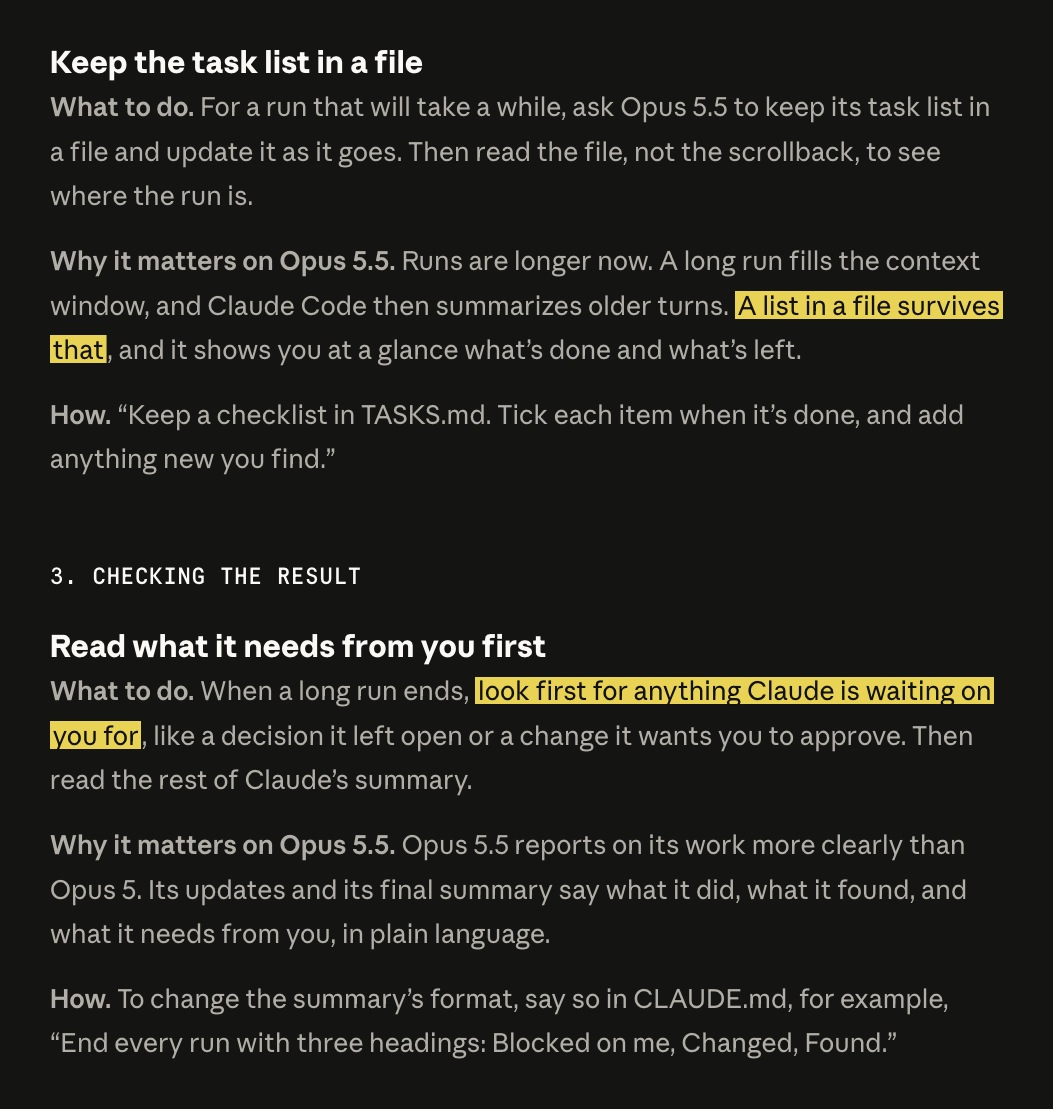
Automated Review and Verification
Anthropic suggests having Opus 5.5 perform initial reviews of its own work. Users can prompt the model to identify potential bugs, explain reasoning, and explicitly mark areas where information remains unverified.
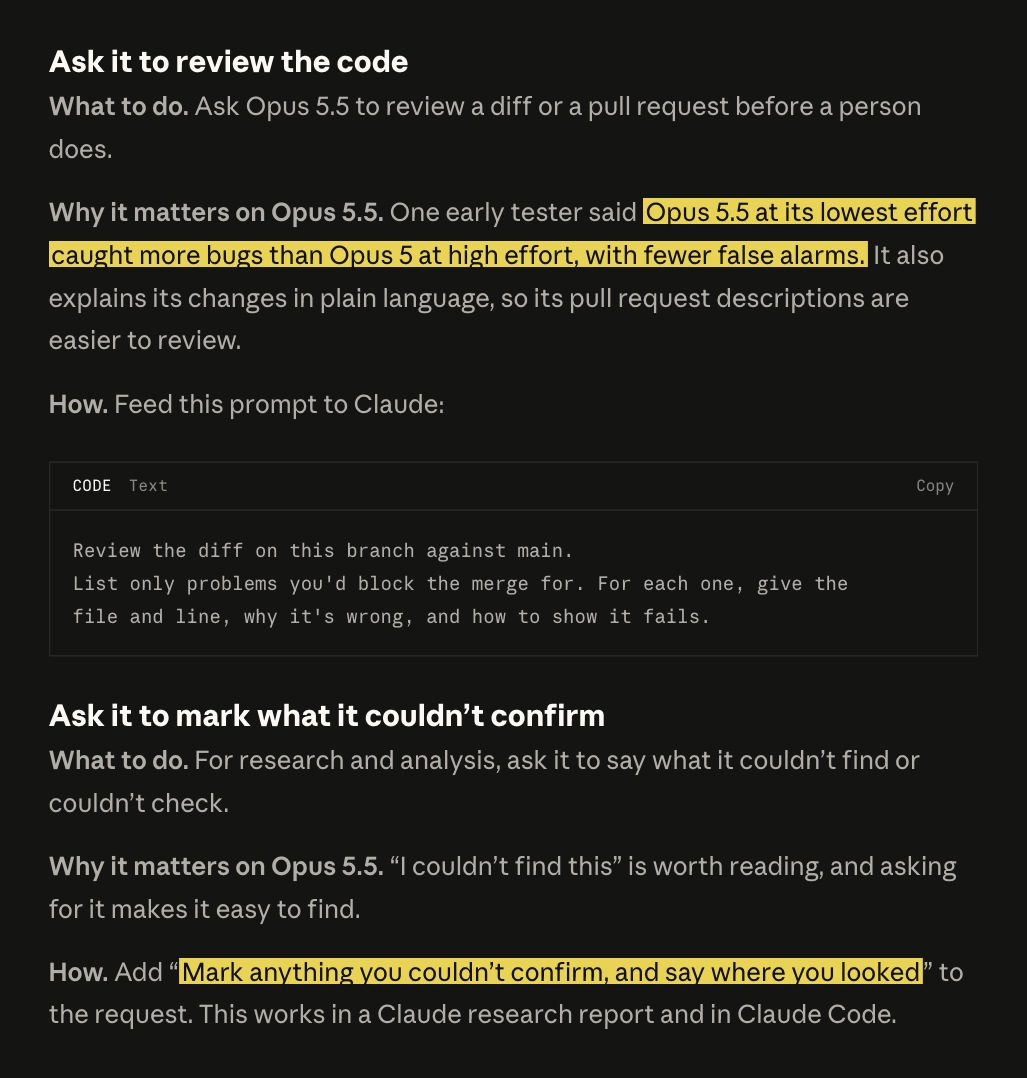
Claude App Capabilities
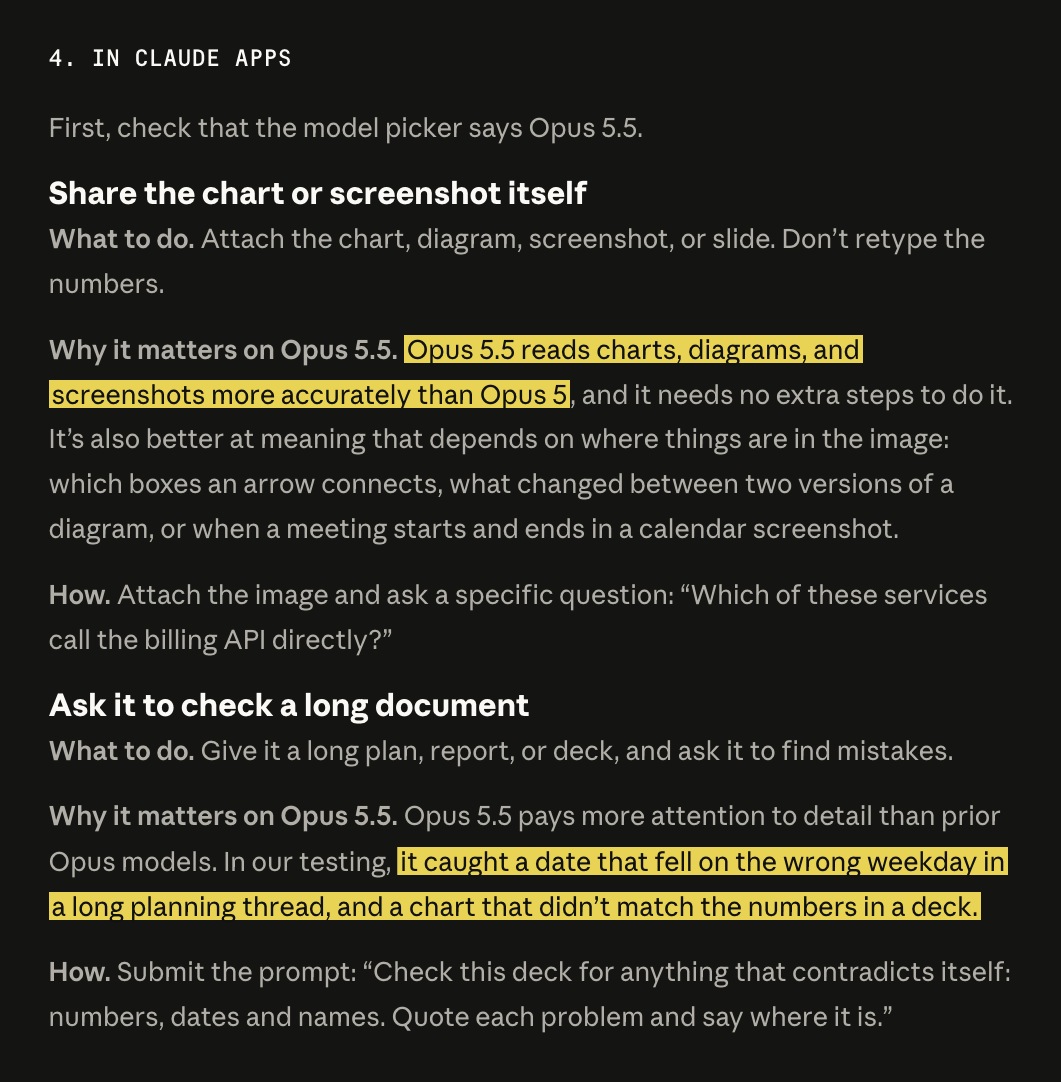
Opus 5.5 shows improved accuracy in interpreting visual data like charts and diagrams. Users can request full documents or spreadsheets rather than summaries and should use project instructions to maintain focus in long conversations.
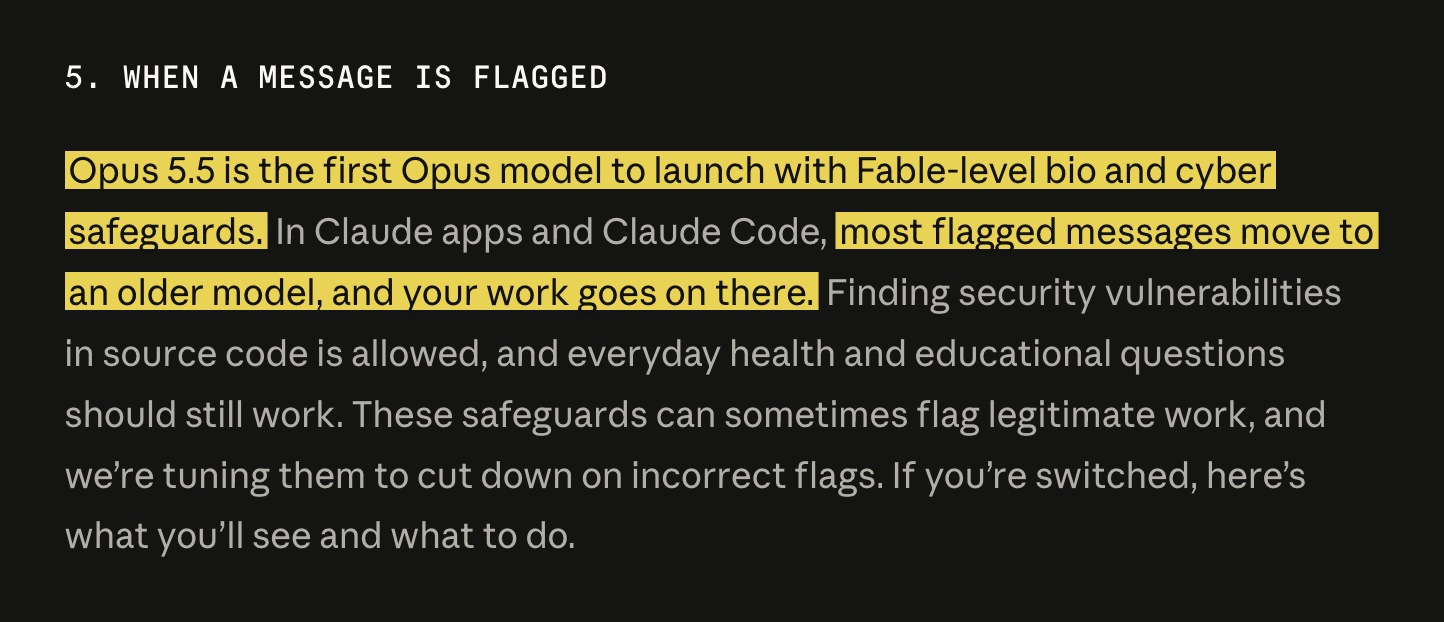
Safety and Model Transitions
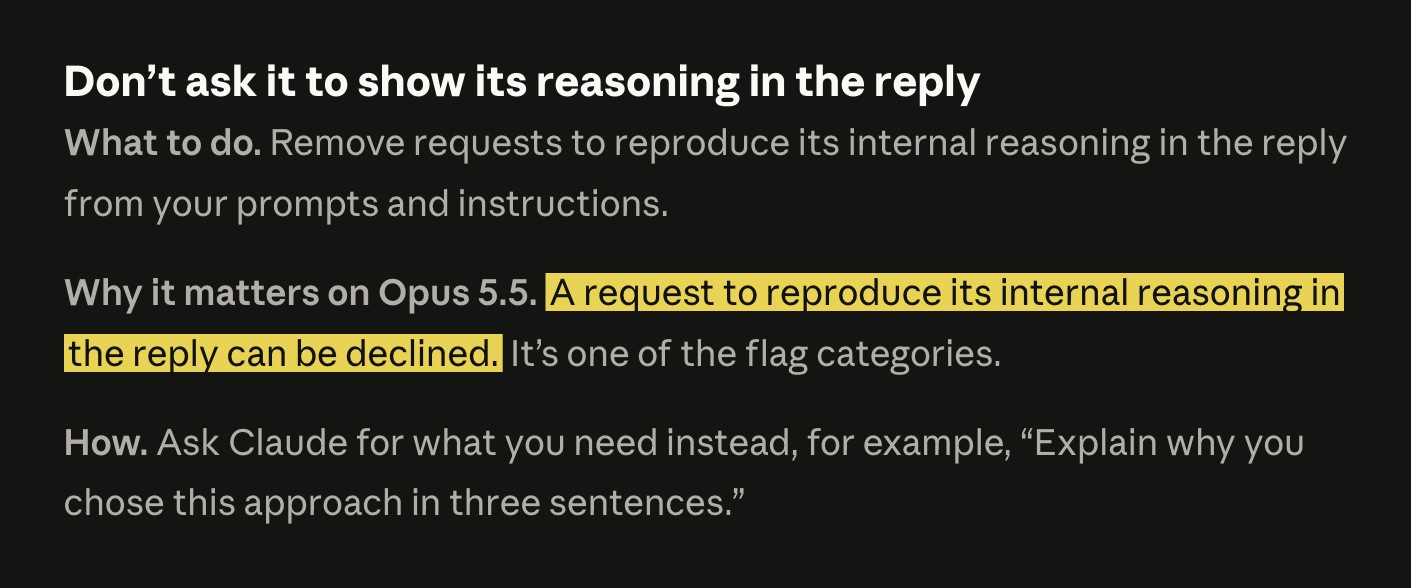
Opus 5.5 includes updated safety guardrails. If a message triggers a transition to an older model, users can manually re-select Opus 5.5 or adjust their prompt. Direct requests for internal reasoning are blocked, so users should ask for specific explanations instead.
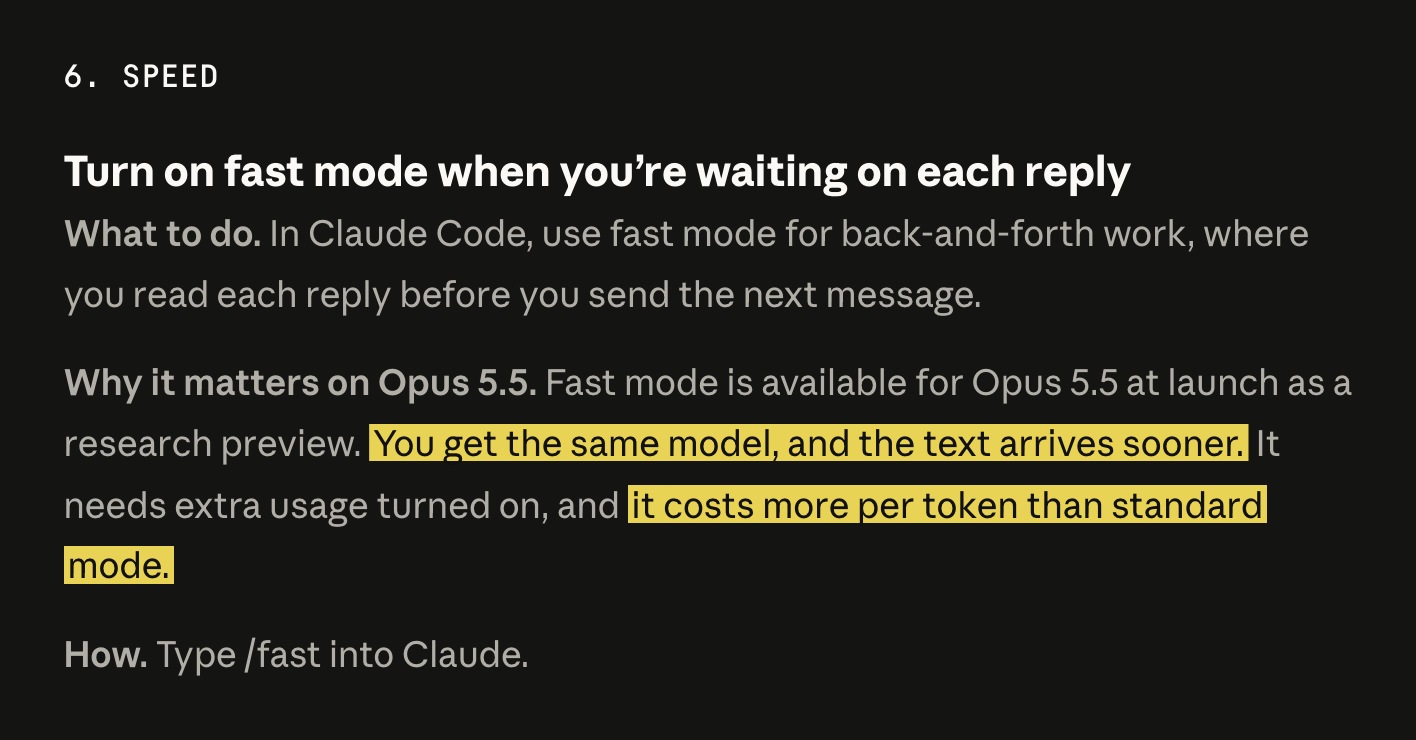
Fast Mode for Interaction
A new "fast mode" is available for Claude Code, intended for interactive, short-turn tasks. While it provides quicker responses, it incurs higher costs and is less efficient for long-running autonomous tasks compared to standard mode.
Evolution of User Role
The user's role is evolving from providing step-by-step instructions to designing task boundaries and verification protocols. Success depends on clear stop conditions and effective use of CLAUDE.md to manage the model's autonomy.
Source Documentation
The full guide and additional details regarding Opus 5.5 optimization are available on the official Claude developer blog.
Source notes
This is a linked resource, not an independent verification of performance, cost or results. Check the original for current details.
- Collected
- 2026-09-23
- Discovered via
- www.threads.com
Top 10
Supporter
- Wallpets 144 clicks87d left
 W
W - Walltank 129 clicks87d left
 W
W - CChowder 78 clicks87d left
- Falconer 65 clicks87d left
 F
F - Lemonpod 101 clicks87d left
L
- Menta 54 clicks87d left
 M
M - Sway 46 clicks87d left
S
- Peon-Ping 44 clicks87d left
 P
P - Zeron 104 clicks87d left
 Z
Z - Guideless 37 clicks87d left
 G
G