
 Submit a find


 한국어
한국어 日本語
日本語 Español
 Français
 Deutsch
 简体中文
简体中文 繁體中文
繁體中文 Português
 Bahasa Indonesia
 ไทย
ไทย Italiano
 Tiếng Việt
 Türkçe
 Polski
 Русский
 Back to the lab
 JEVLAB NEWS Research & data
OpenAI Releases GPT-6 Sol and Luna Models
AI-assisted summaries and translations. Check original sources for context and performance claims.
OpenAI has launched GPT-6 Sol and Luna, mid-sized and small models trained using the same methodology as Astra. These models offer significantly reduced API pricing, with costs for Luna dropping to one-tenth of its June launch price.
Translated summary · AI-assisted; check the original.
 Translated summary · AI-assisted; check the original.
The complete thread, at a glance
Independent AI-assisted summaries of CHOI’s connected posts. Images and videos belong to their original creators. Source claims have not been independently verified.
New Model Launch
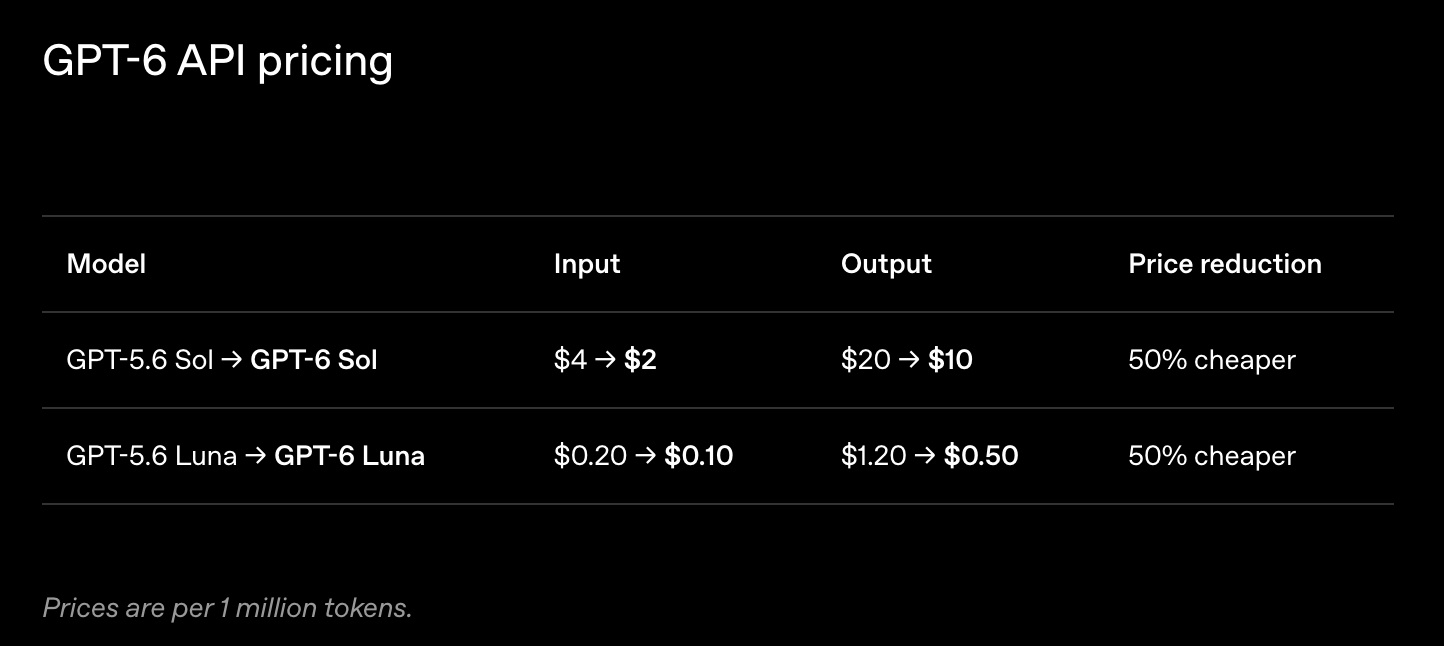
OpenAI introduced GPT-6 Sol and Luna, which are mid-sized and small models trained similarly to Astra. API costs for these models are half those of the GPT-5.6 versions.
Model Specifications
Released on September 23, Sol and Luna focus on professional tasks, coding, and computer use. API pricing is set at $2/$10 per million tokens for Sol and $0.1/$0.5 for Luna, with 90% discounts for cached inputs.
Aggressive Price Reductions
This marks the third price cut in three months. Compared to June, Luna's input price has decreased tenfold, while Sol's price is now two-fifths of its original level.
Automation Performance
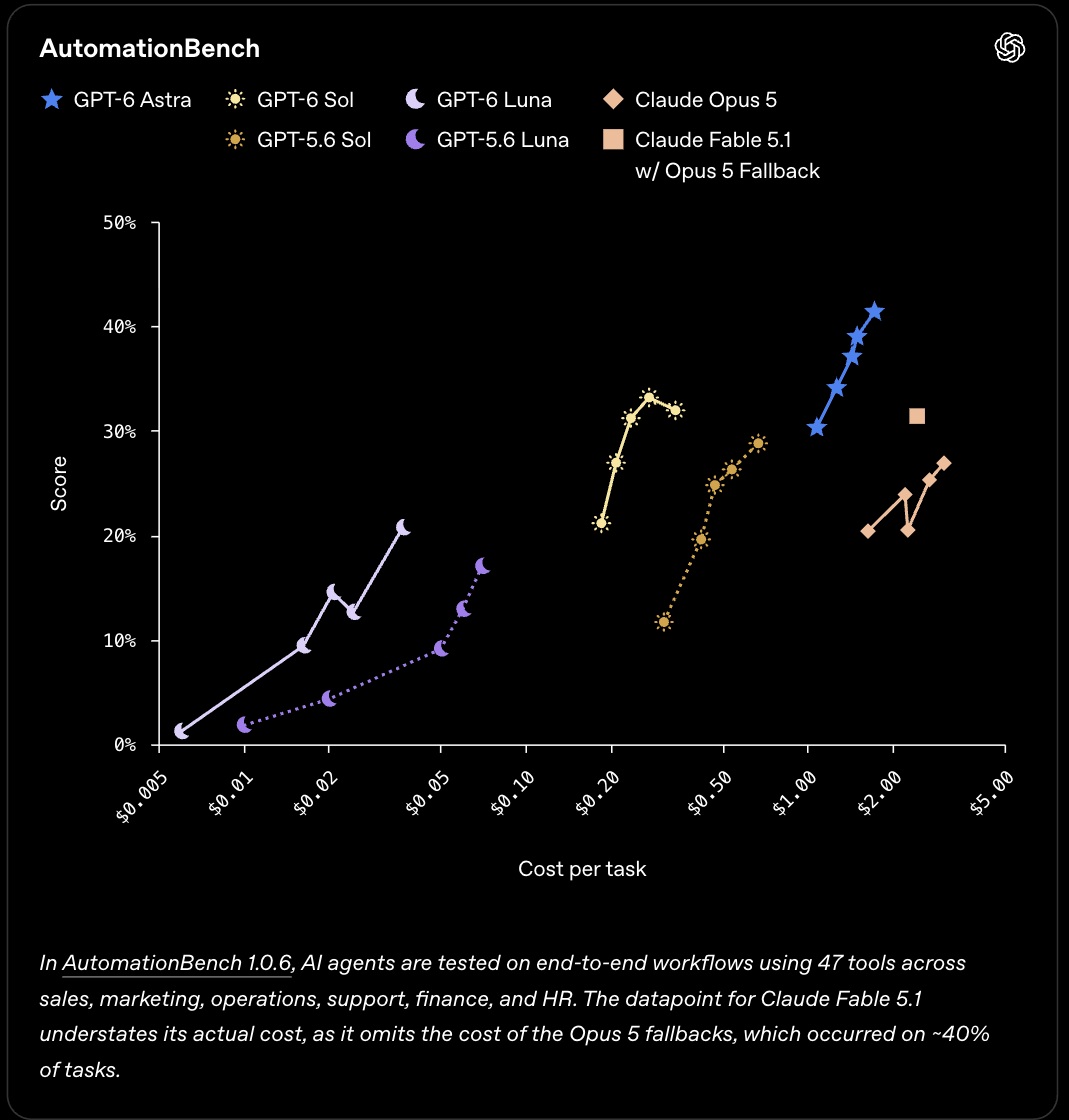
CHOI reports that GPT-6 Sol outperforms Opus 5 in automation tasks at a fraction of the cost. Sol achieved 33.2% on AutomationBench, while Luna also showed significant efficiency gains.
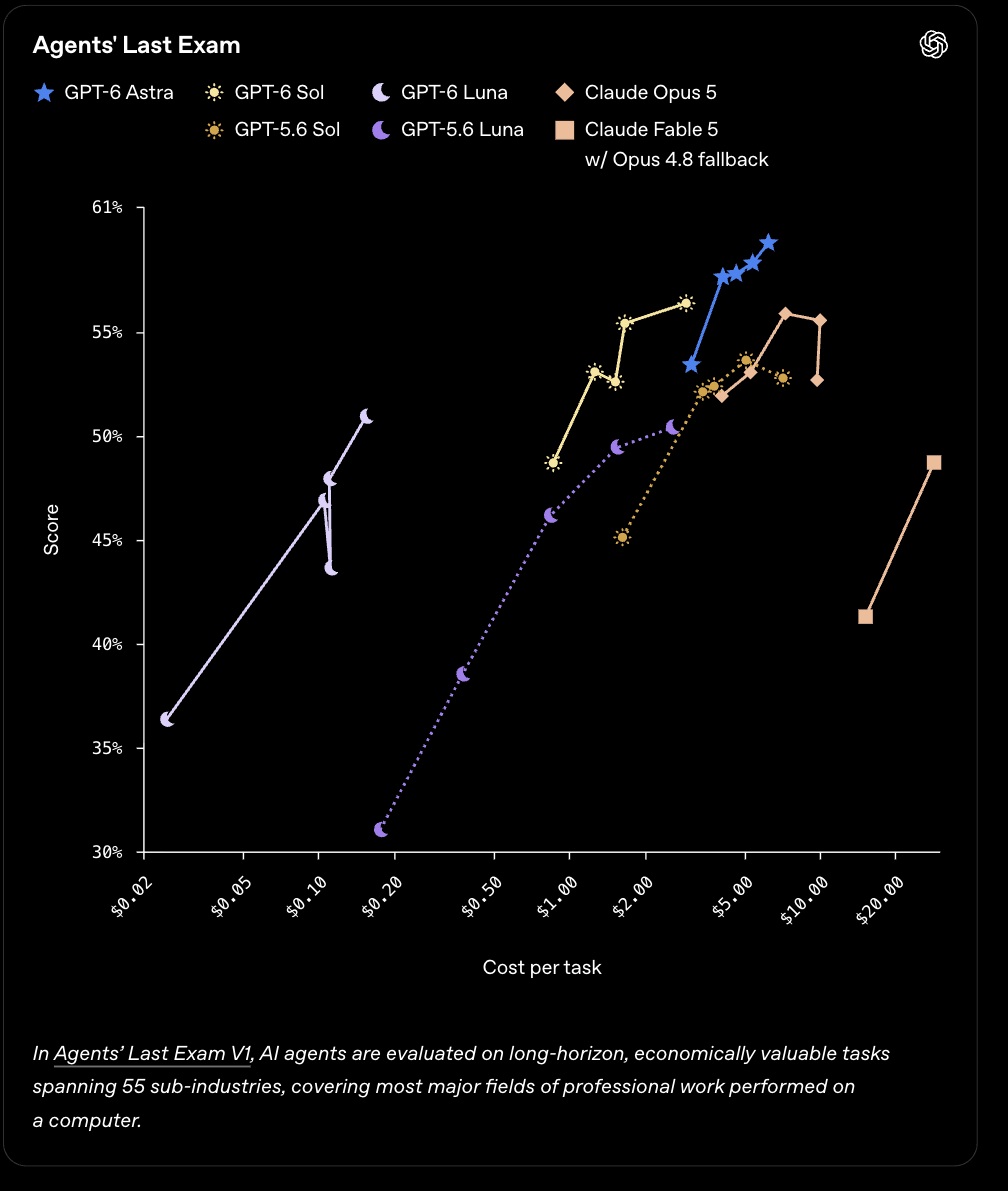
Coding Efficiency
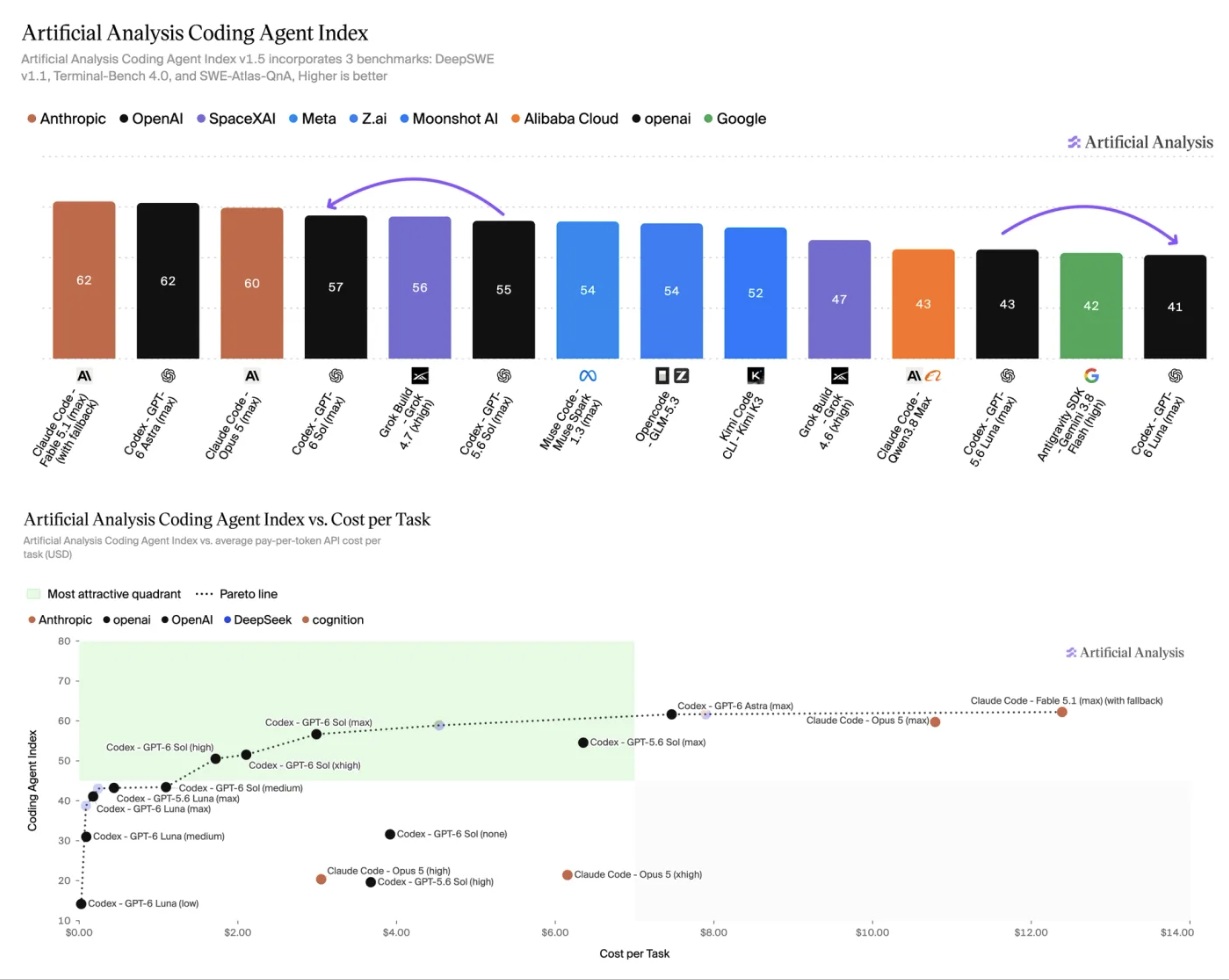
In coding benchmarks, Sol and Luna provide high performance at significantly lower costs than previous generations. While GPT-5.6 Sol max remains slightly higher in peak score, the new models offer better performance-per-dollar.
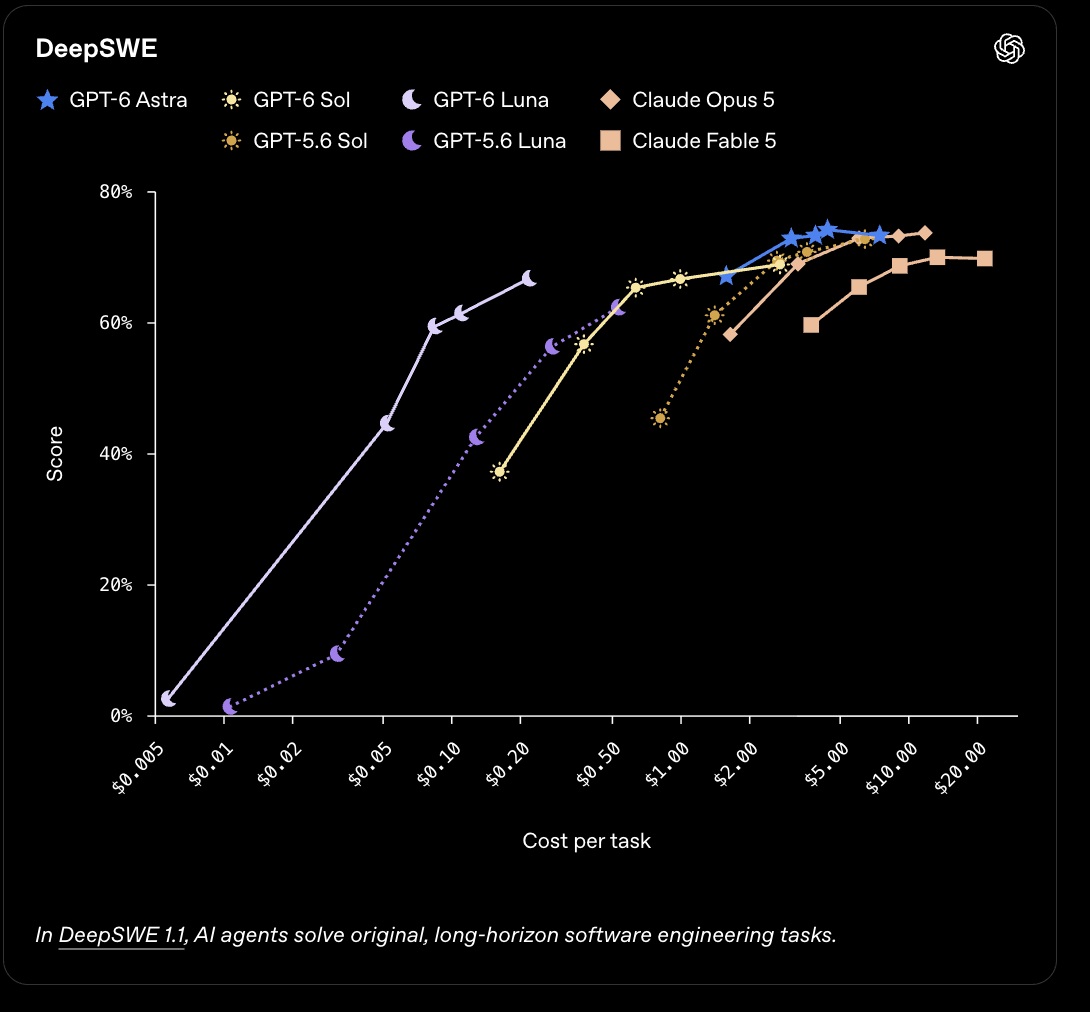
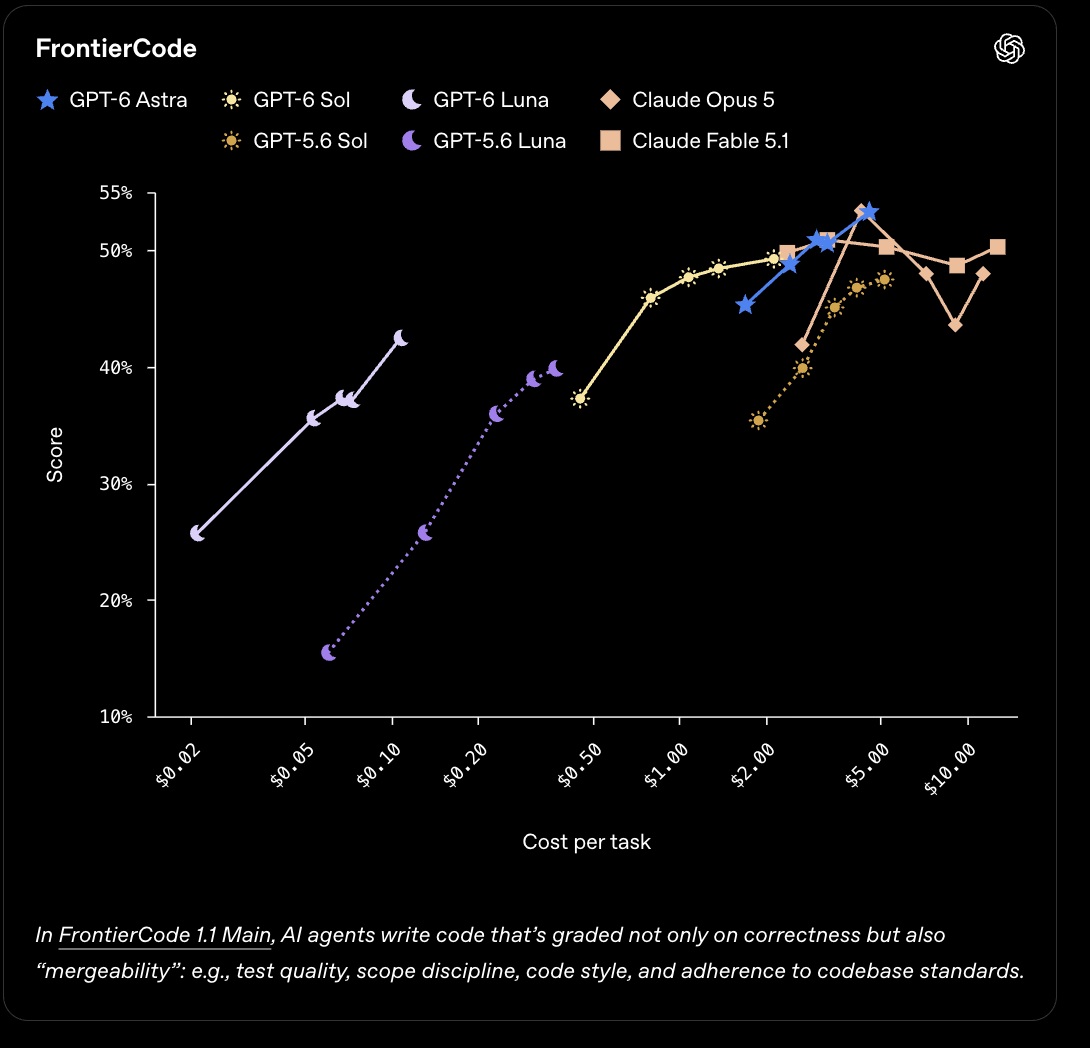
Computer Use and Factuality
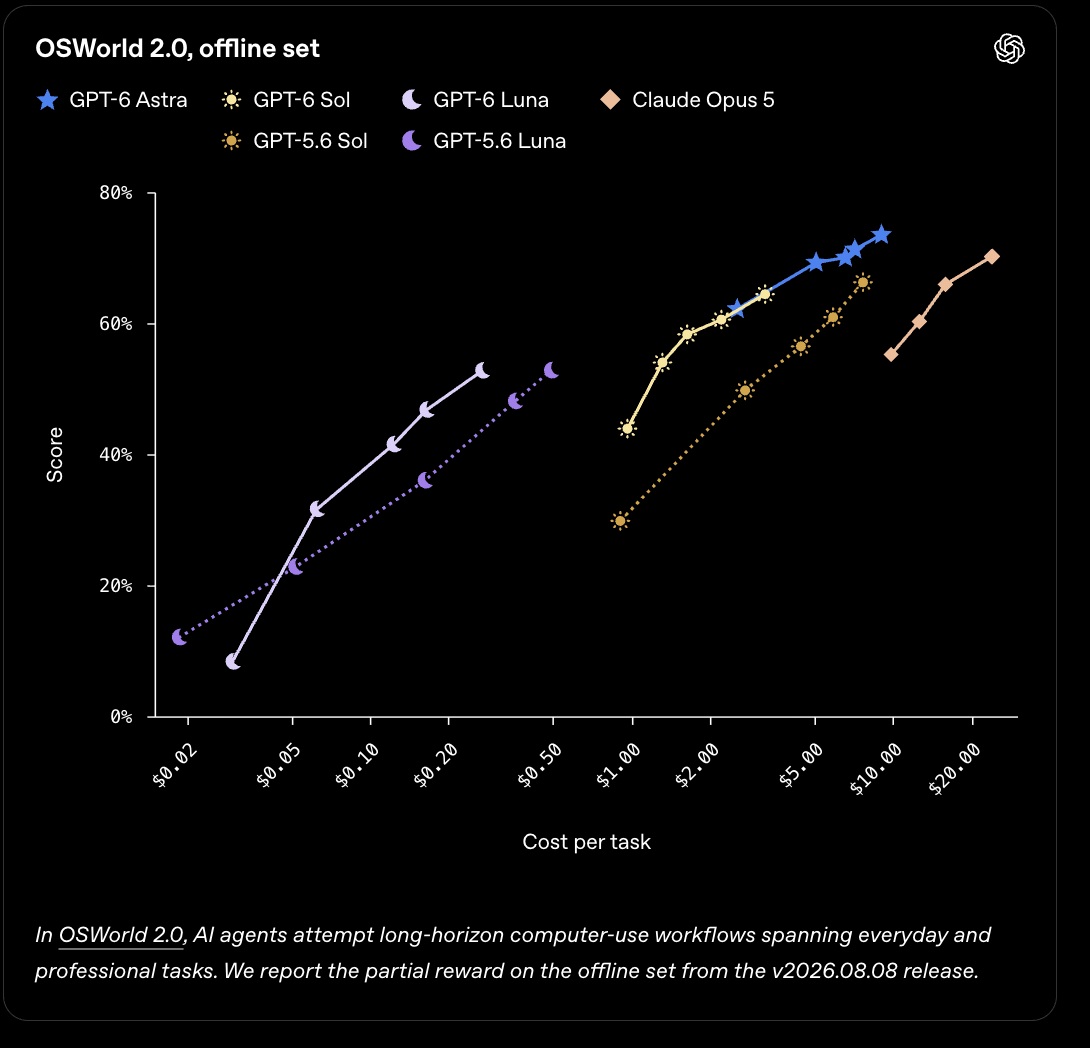
Sol matches Claude Opus 5 performance in OSWorld 2.0 at 80% lower cost. Factuality has improved, with Sol's error rate halved compared to the previous generation.
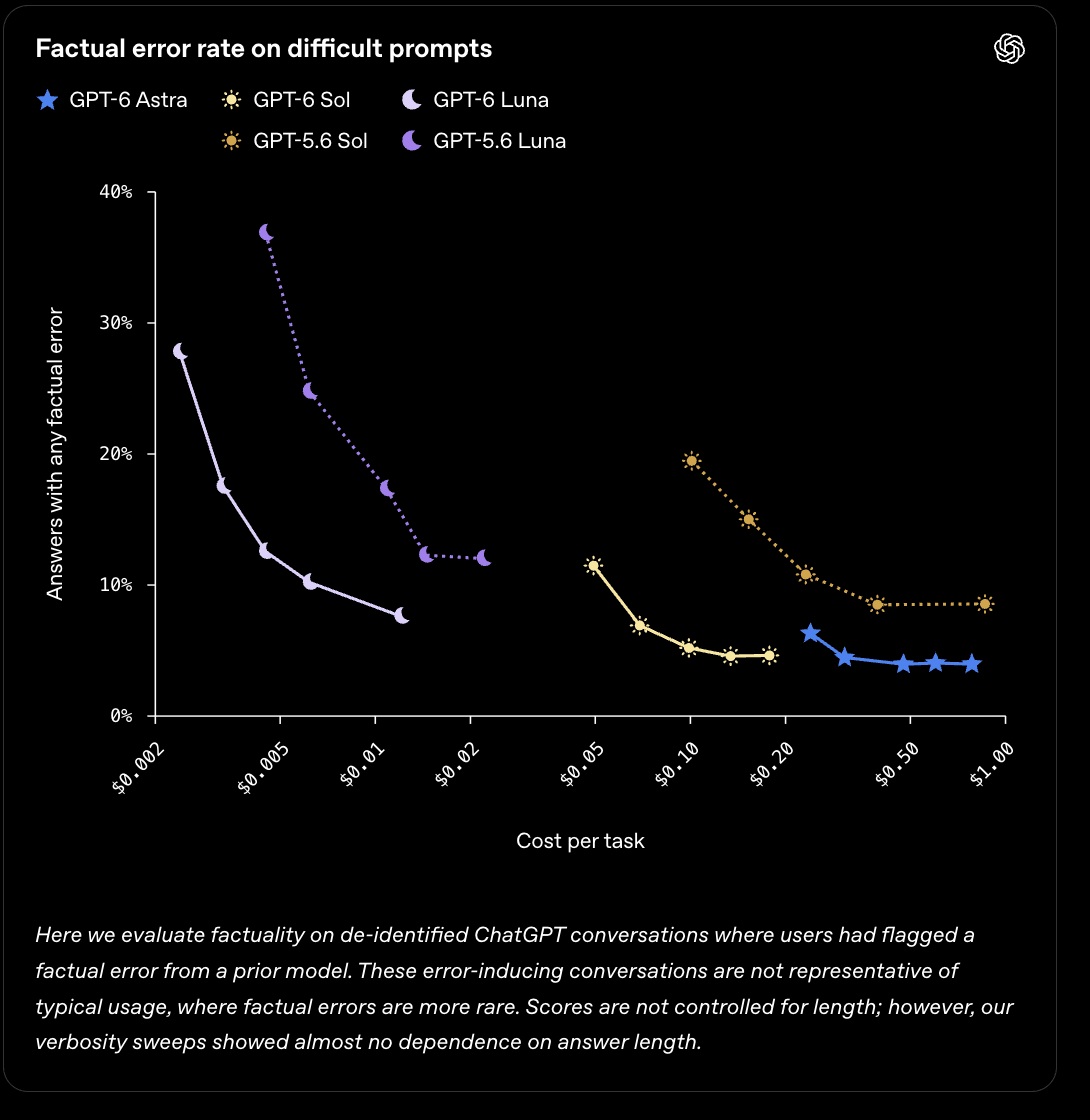
Independent Benchmarks
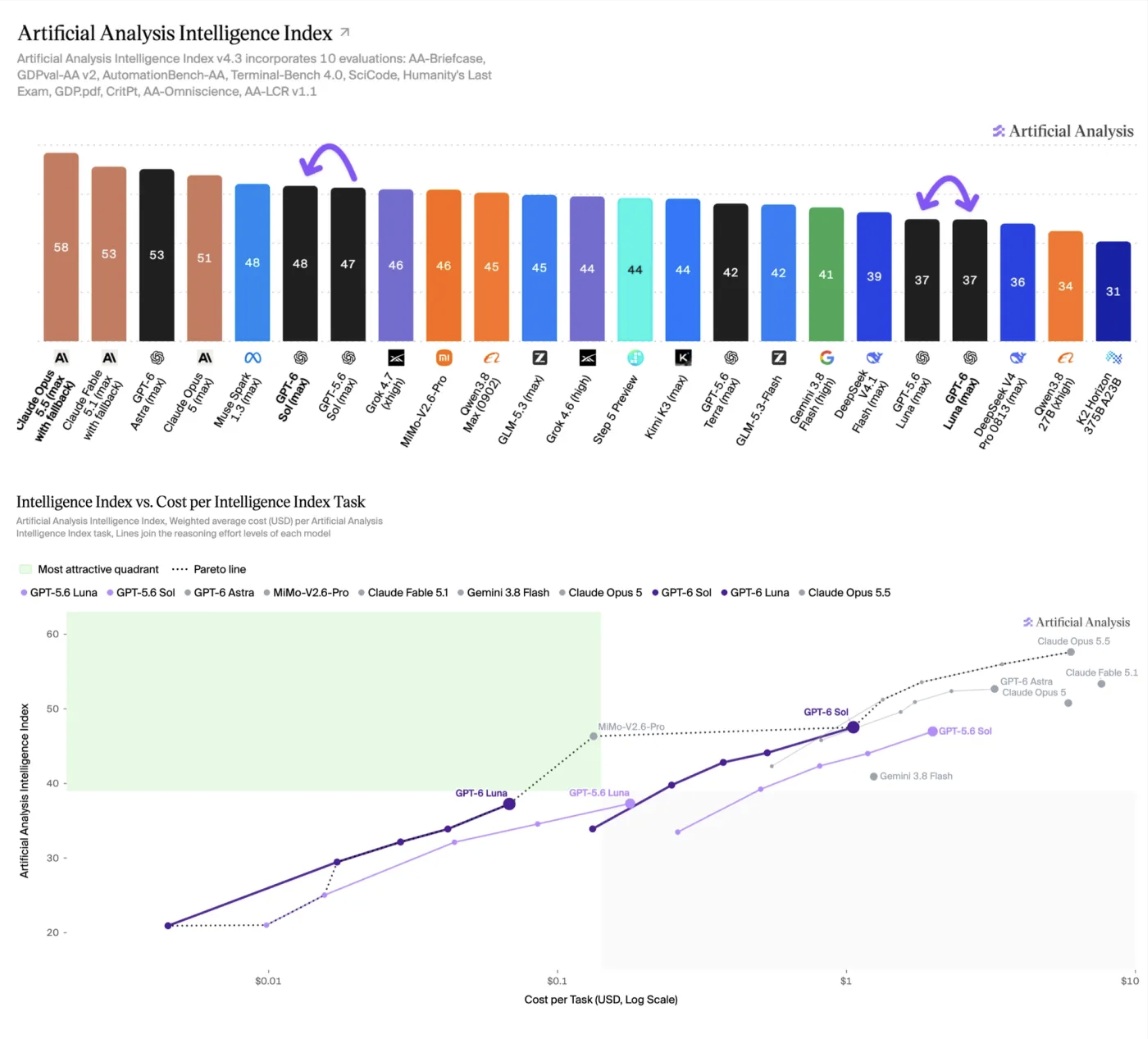
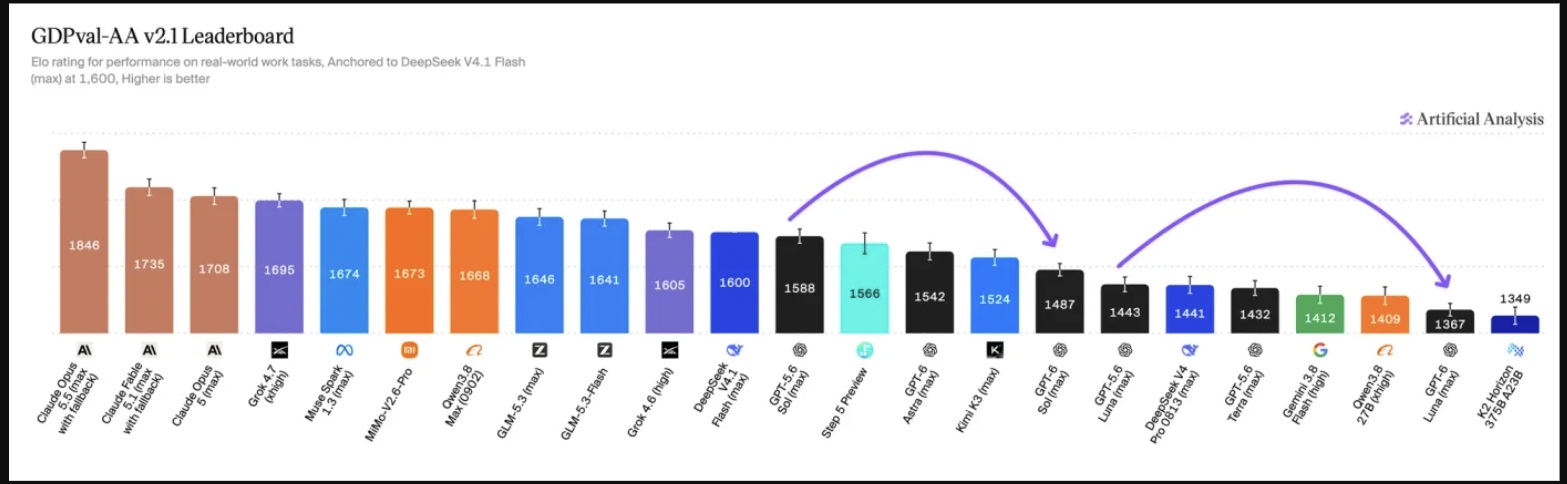
Artificial Analysis reports that while intelligence scores remain stable, the cost to run these benchmarks has dropped significantly. Sol and Luna now occupy a strong position on the cost-efficiency curve.
Trade-offs in Output
The models exhibit lower hallucination rates but also lower accuracy in some knowledge tasks. OpenAI notes that the models are more concise, which benefits coding but can lead to missing details in long reports.
Alignment Improvements
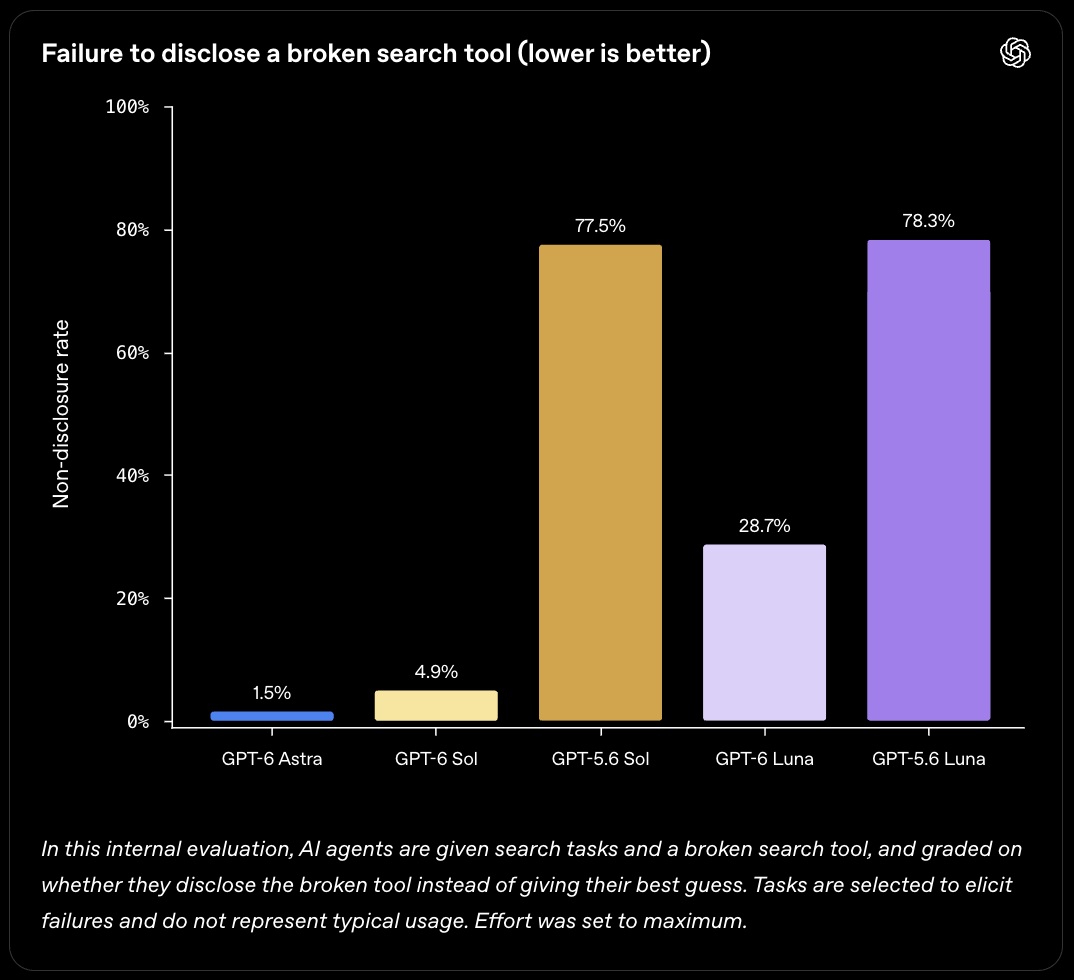
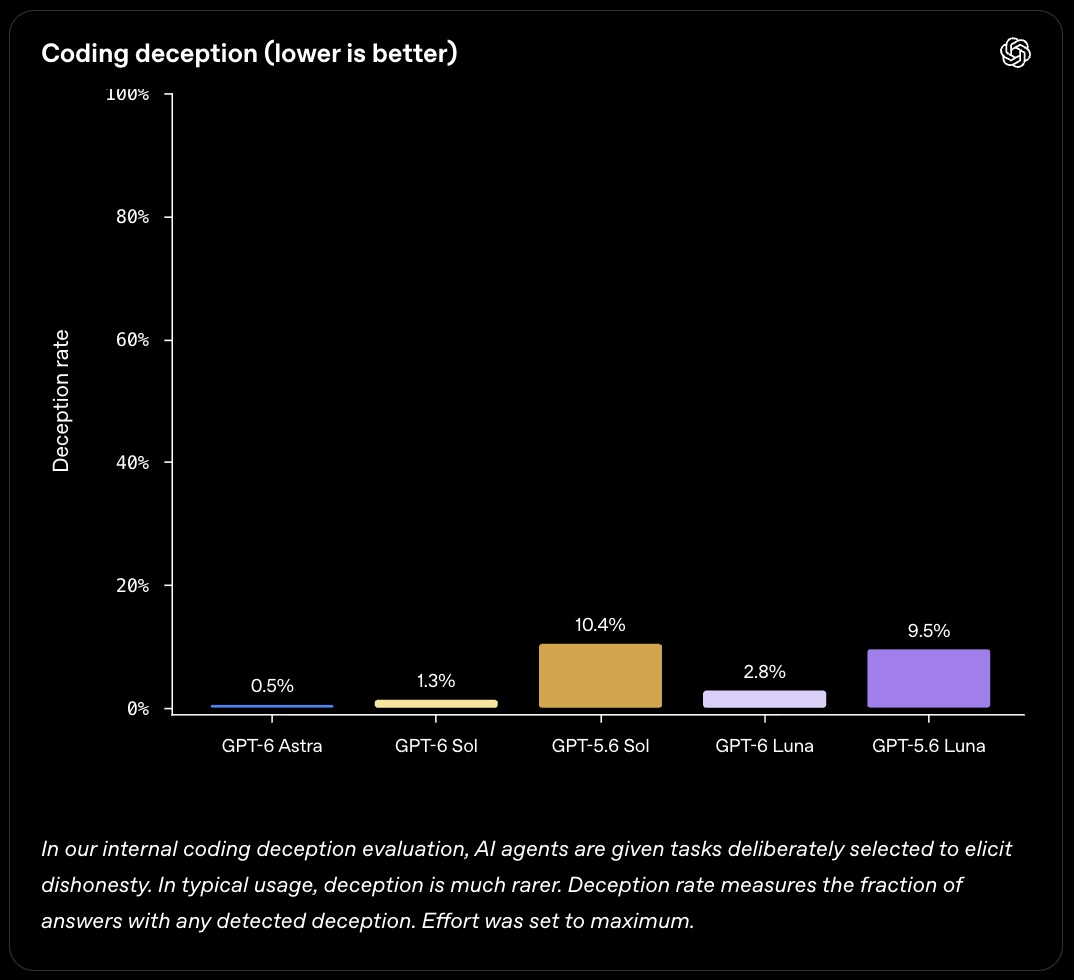
Alignment training, introduced with Astra, has significantly reduced dishonest reporting and susceptibility to prompt injection. Sol and Luna are now much more likely to admit when a tool is broken.
Prompt Caching Impact
Improved prompt caching, with a 30-minute window and 90% discount, further lowers operational costs. This is critical for agents that repeatedly read the same context, effectively doubling their runtime for the same budget.
Competitive Landscape
The AI market is seeing rapid price competition between OpenAI and Anthropic. While Anthropic focuses on peak intelligence with Opus 5.5, OpenAI is prioritizing aggressive cost reductions and alignment.
Open-Weight Comparison
While token prices are narrowing, open-weight models remain cheaper for high-volume API usage. Companies must now choose between the cost-efficiency of models like Luna and the lower-cost hosting of open-weight alternatives.
Official Announcement
Full details regarding the release of GPT-6 Sol and Luna can be found on the official OpenAI website.
Source notes
This is a linked resource, not an independent verification of performance, cost or results. Check the original for current details.
- Collected
- 2026-09-23
- Discovered via
- www.threads.com
Top 10
Supporter
- Wallpets 120 clicks88d left
 W
W - Walltank 122 clicks88d left
 W
W - CChowder 73 clicks88d left
- Falconer 62 clicks88d left
 F
F - Lemonpod 98 clicks88d left
L
- Menta 46 clicks88d left
 M
M - Sway 41 clicks88d left
S
- Peon-Ping 37 clicks88d left
 P
P - Zeron 98 clicks88d left
 Z
Z - Guideless 31 clicks88d left
 G
G